



 Watch video








 Sign in with Google
YouTube Strategy
How to do YouTube competitor analysis (and how TubeBuddy makes it easier)

TLDR
- YouTube competitor analysis helps you understand what works in your niche and what viewers respond to.
- TubeBuddy’s Competitor Analysis Tool gives you clear, side-by-side comparisons so you can track growth, performance, and opportunities.
- You can also do manual or semi-automated competitor research without TubeBuddy using public analytics, YouTube Studio, and keyword tools.
- The key is turning competitor insights into action: better titles, stronger topics, smarter metadata, and realistic goals for your channel.
- TLDR
- Why YouTube competitor analysis matters
- Subscriber growth
- Average views per video
- Engagement rate
- Upload frequency
- Content type, format, and length
- Step 1: Open the Competitor Tool
- Step 2: Add competitor channels
- Step 3: Review the Scorecard
- Step 4: Analyze growth patterns
- Step 5: Track new uploads in real time
- Manually compare channels in YouTube Studio
- Look at public analytics
- Use keyword tools
- Review metadata manually
- Define your channel’s position
- Adapt formats that already work
- Improve your titles, thumbnails, and metadata
- Set realistic goals
- Build a trend-aware content calendar
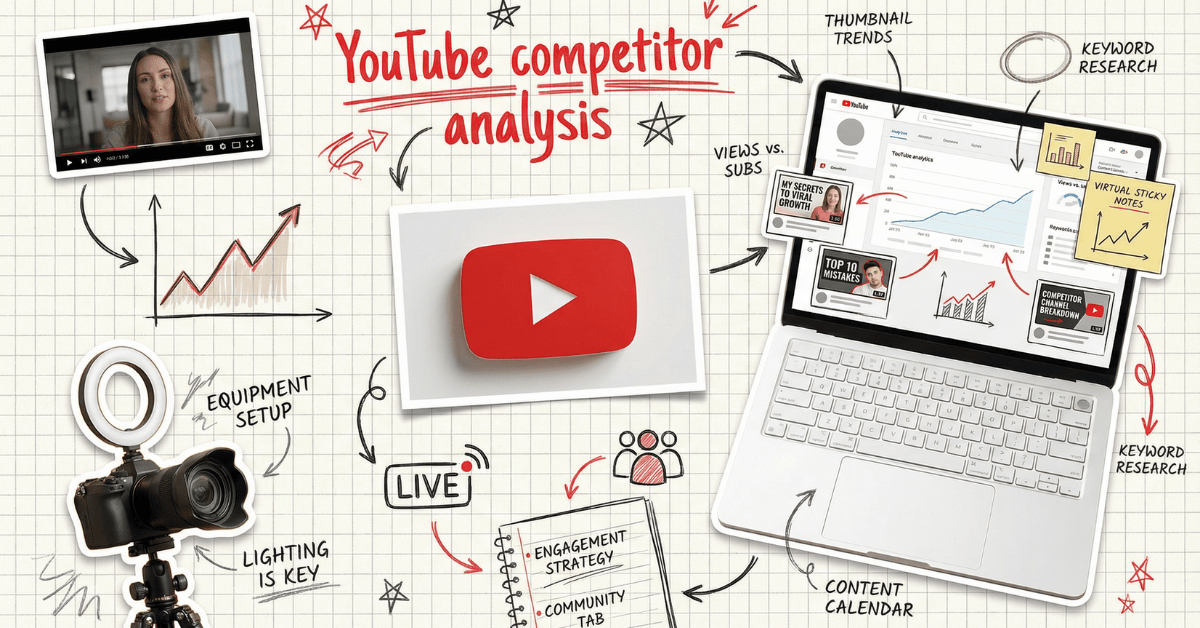
Studying what other creators publish, how often they grow, and which videos perform best is one of the fastest ways to improve your YouTube strategy. Whether you use TubeBuddy’s YouTube Competitor Analysis Tool or prefer manual methods, understanding competitor behaviour helps you spot opportunities and make smarter decisions.
This guide explains why YouTube competitor analysis matters, the key metrics to look at, how to use TubeBuddy’s tool, and how to apply these insights to grow your channel. You’ll also find practical alternatives if you want to run competitor research without software.

Get an unfair advantage on YouTube
Give your YouTube channel the upper hand and easily optimize for more views, more subs, and more of every metric that matters.
Why YouTube competitor analysis matters
Understand what works in your niche
Watching how other creators approach topics, pacing, and formats helps you understand what your audience expects. Look for repeatable patterns. When you see formats or hooks that consistently perform well, you can adapt them to fit your channel’s style.
Identify content gaps you can fill
Even the best creators miss opportunities. Competitor analysis shows you topics they haven’t covered, unanswered questions in your niche, or formats they rarely use. Those gaps are often the easiest wins.
Benchmark growth and set realistic goals
If a similar creator earns 2,000 views per new upload, that offers a more helpful benchmark than industry averages. Clear comparisons make it easier to measure your progress and adjust your strategy.
Build a data-informed content strategy
Competitor data removes guesswork. Instead of hoping a topic might work, you can see proof that audiences already respond to certain formats, lengths, or themes.
Stay updated on trends
By tracking competitors, you spot new video ideas, emerging formats, and viewer behaviour before they peak.
For more on understanding your audience, check out TubeBuddy’s post on how to use Audience Understanding tool.
Key metrics to track from competitor channels
Subscriber growth
Growth curves reveal momentum and whether a creator’s content resonates over time.
Average views per video
This is one of the strongest indicators of a channel’s real performance. It helps you understand audience reach and how often videos break out.
Engagement rate
Likes, comments, and shares help you see which videos drive real interaction. High engagement often hints at strong storytelling or a precise topic-audience match.
Upload frequency
Consistency shapes viewer expectations. Track how often top creators publish and how that correlates with their growth.
Content type, format, and length
Tutorials, reviews, Shorts, livestreams, storytelling, long-form explainers—they all perform differently by niche. Video length is also shifting as creators mix Shorts with long-form.
For more on improving your own engagement metrics, see our guide to boosting audience retention.
How to use TubeBuddy’s Competitor Analysis Tool

TubeBuddy gives you an all-in-one view of up to 10 competitor channels. Instead of bouncing between tabs, you can compare metrics from a single dashboard.
Step 1: Open the Competitor Tool
Open YouTube Studio, hit the TubeBuddy menu in the top, select Quick Links, and click Competitor under Website Tools.
Step 2: Add competitor channels
Paste the URL of any channel you want to compare. Add creators with a similar niche or audience size to ensure meaningful insights.
Step 3: Review the Scorecard
The Scorecard visualizes metrics such as:
- lifetime views
- upload activity
- average views per video
- subscriber growth
- engagement patterns
Seeing everything side-by-side makes it easier to identify strengths and weaknesses across channels.
Step 4: Analyze growth patterns
Look for growth spikes, breakout videos, or stagnant periods. These signals often correlate to topic choices, posting frequency, or improved metadata.
Step 5: Track new uploads in real time
TubeBuddy alerts you via email, text, or in-app notification whenever a competitor publishes. This helps you spot rising trends before they saturate.
Get an unfair advantage on YouTube
Give your YouTube channel the upper hand and easily optimize for more views, more subs, and more of every metric that matters.
How to analyze YouTube competitors without TubeBuddy
If you’re not ready to use a tool, you can still run meaningful competitor research manually.
Manually compare channels in YouTube Studio
Use the Research tab in YouTube Studio to find rising searches and see what videos competitors have made around those terms.
Look at public analytics
You can track:
- upload frequency
- views on recent videos
- average views after 24–48 hours
- typical video length
- standout thumbnails
Use keyword tools
Platforms like Google Trends, YouTube Search suggestions, and basic keyword tools help you understand viewer demand.
Review metadata manually
Study competitor titles, thumbnails, descriptions, pinned comments, CTA placement, and chapter structure.
For more SEO insights, visit our post on YouTube search optimization tips.
How to turn competitor insights into a stronger growth strategy
Define your channel’s position
Use gaps in competitor content to sharpen your niche and message.
Adapt formats that already work
If tutorials outperform reviews in your niche, or 8–12 minute videos consistently pull more views, prioritize those formats.
Improve your titles, thumbnails, and metadata
Borrow the structure of winning titles. Look at the storytelling approach in thumbnails. Apply what works while keeping your brand voice.
Set realistic goals
Use competitor numbers to set targets for:
- average views
- upload frequency
- subscriber growth
Build a trend-aware content calendar
Spot recurring themes or emerging ideas competitors use. Add them to your calendar while the demand curve is rising.
FAQs: YouTube competitor analysis
How do I choose the right YouTube competitors to track?
Pick creators in your niche with similar audience size or similar goals. Avoid channels far larger than yours, since their data won’t offer realistic benchmarks.
What is the most important metric when comparing YouTube channels?
Average views per video. It shows the true, repeatable performance of a channel regardless of subscriber count.
Can competitor analysis help with YouTube SEO?
Yes. Reviewing competitor titles, keywords, thumbnails, and descriptions helps you refine your own SEO approach. It also reveals the search terms that consistently attract views.
Do I need TubeBuddy to analyze competitors?
No. You can compare channels manually using public data, but TubeBuddy centralizes everything and saves a lot of time.
How often should I review competitor data?
Once a month is ideal for strategy, while watching real-time uploads helps you spot trends early.
Conclusion
YouTube competitor analysis helps you understand what works, where gaps exist, and how you can stand out. TubeBuddy’s Competitor Analysis Tool simplifies the process and gives you clear benchmarks to improve titles, thumbnails, ideas, and posting rhythm.
Whether you track competitors manually or through TubeBuddy, the goal is the same: build a smarter strategy that supports steady growth and a stronger connection with your audience.
Get an unfair advantage on YouTube
Give your YouTube channel the upper hand and easily optimize for more views, more subs, and more of every metric that matters.





